
Why language and symbols matter: because Babylon steals by simplifying
Babylon rarely steals culture by force. Babylon steals culture by editing. It takes a deep thing and flattens it into a trend. It takes a sacred symbol and turns it into a print on a shirt. It takes a living language and turns it into slang.
Rastafari responds with cultural literacy—language, symbols, and expressions that hold the original meaning in place. These are not accessories. They are survival tools. When a movement becomes global, it must protect its definitions or it becomes a costume in somebody else’s marketplace.
ReggaeDread lens: If you don’t protect your meanings, the world will rent them out and call it “culture.”

Iyaric: words as medicine, words as defense
“Iyaric” (often written as Iyaric/Iyaric speech) refers to the Rastafari way of shaping language. It’s not only vocabulary—it’s a philosophy: speech can heal or harm. Speech can free or program. In a world where colonial language often carried humiliation and hierarchy, Rasta refashioned words to refashion the mind.
In Part 4 we talked about reasoning as a classroom. Iyaric is part of that curriculum. It helps people speak in a way that affirms life, dignity, and unity. And it also refuses Babylon’s habit of putting death, shame, and inferiority inside everyday expressions.
Iyaric is not “slang”—it’s intention
Slang can be random. Iyaric is deliberate. It is language used as spiritual discipline. The goal isn’t to sound exotic; the goal is to keep the mind aligned.
“I” as central: restoring the self without ego
One of the most recognizable patterns in Rasta speech is the emphasis on “I” as a spiritual center—not ego, but dignity. The point is not to become selfish. The point is to reject the colonial training that taught Black people to see themselves as less. “I” becomes a spiritual reminder: the divine is present; life is sacred; the self is not disposable.
This emphasis also reinforces unity: the idea that “I and I” expresses connectedness—self and community, human and divine, one life within the larger life. It resists the Babylon habit of fragmentation.
Important clarity: Different Rasta communities use language differently. Don’t treat Iyaric like a gimmick; treat it as cultural practice with real meaning.

Red, gold, green: colors as condensed history
Colors can be decoration—or they can be compressed philosophy. In Rastafari, red-gold-green is not just a palette. It signals ancestry, sacrifice, prosperity, earth, and sovereignty—an entire worldview coded into three stripes.
Those colors travel globally now: on flags, hats, murals, stage backdrops, record covers. But the meaning can fade if people only see “cool colors” instead of cultural memory.
Common meanings carried by the colors
| Color | Often symbolizes | Cultural feel |
|---|---|---|
| Red | Struggle, sacrifice, history written in blood | Warning + remembrance |
| Gold | Wealth of spirit, sunlight, prosperity, promise | Hope + dignity |
| Green | Earth, growth, nature, livity | Grounding + life |
Note: Symbol meanings can vary slightly by community and context; what’s consistent is that these colors carry identity, not just design.
The Lion of Judah: sovereignty, courage, and sacred lineage
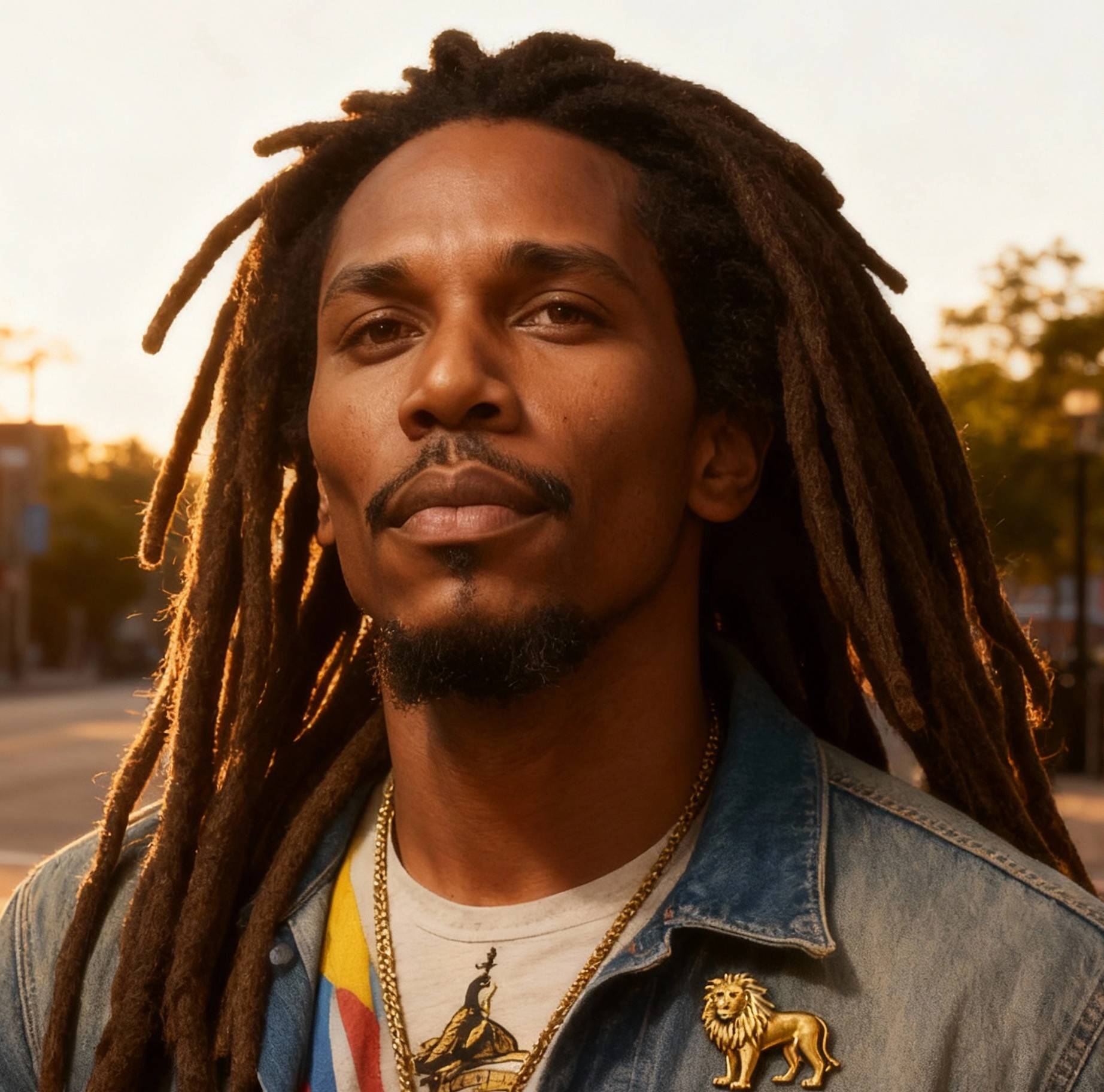
The Lion of Judah is one of the most powerful and widely recognized symbols associated with Rastafari. It carries ideas of kingship, strength, spiritual authority, and Ethiopian lineage. But its deeper force is psychological: it reminds the oppressed that they are not meant to crawl.
In Babylon, the oppressed are trained to be timid, to be grateful for scraps, to accept disrespect as normal. The lion symbol interrupts that training. It says: stand up. Speak truth. Remember your lineage.
When you see the Lion of Judah in Rasta contexts, you’re seeing a banner of dignity—a refusal of humiliation.
What the Lion communicates (beyond aesthetics)
- Sovereignty: we are not spiritually inferior.
- Courage: truth must be spoken even under pressure.
- Lineage: a connection to Ethiopia and biblical imagination.
- Protection: the symbol guards identity against Babylon narratives.
Sacred expressions: how greetings become worldview
In Rasta culture, everyday phrases can function as spiritual reminders. A greeting is not always “small talk.” It can be affirmation. It can be a mini-sermon. It can be a check-in on livity: how you holding your mind today?
This is why Rasta expressions can sound repetitive to outsiders. The repetition is the point. It keeps the worldview close to the tongue. And what stays close to the tongue stays close to the mind.
Why sacred expressions matter socially
- They create community: shared language becomes shared belonging.
- They reinforce values: positivity, truth, and dignity are repeated until they become default.
- They protect meaning: words carry the culture when symbols get commercialized.
Symbols as armor: protecting meaning from dilution
Once a culture becomes popular, it becomes vulnerable. Symbols can be ripped from context and used as marketing—often by people who never carry the struggle behind the symbol.
Rasta symbols act as armor because they compress meaning into recognizable forms. Even when Babylon tries to sell the surface, the deeper community can still recognize the root. Language and symbols become a code—visible enough to gather the family, deep enough to keep outsiders from reducing everything into cliché.
Respect note: Wearing symbols without understanding can contribute to distortion. Cultural literacy is the difference between appreciation and exploitation.
Cultural literacy: the skill of reading beyond the vibe
Part 8 is really about a skill: learning to read culture the way you read scripture—carefully, respectfully, with context. Cultural literacy means you don’t treat a symbol like a toy. You ask what it survived. You ask what it protects. You ask who paid the price for it to exist.
When cultural literacy is strong, the culture stays alive even while it travels. When cultural literacy is weak, the culture becomes a costume and the root gets forgotten.
How Part 8 prepares Part 9: daily lifestyle, ritual, and reasoning in practice
Language and symbols protect meaning, but the final test of meaning is how people live. Part 9 moves into the everyday: reasoning sessions, community living, spiritual discipline, rituals, and the modern adaptations that keep Rasta livity alive in changing times.
FAQ: Iyaric, symbols, and sacred expression
Is Iyaric just slang?
No. Iyaric is intentional language shaped to affirm life, dignity, and spiritual alignment—often used to resist Babylon’s negative programming through words.
What do red, gold, and green mean?
Meanings vary slightly by community, but commonly: red for struggle/sacrifice, gold for prosperity/promise, and green for earth/growth—identity coded into color.
Why is the Lion of Judah important?
It symbolizes sovereignty, courage, spiritual authority, and lineage—often tied to Ethiopia and biblical imagination—and functions as a banner of dignity.
How can people engage respectfully with Rasta symbols?
Learn the context, avoid caricature, listen to Rasta voices, and treat symbols as cultural memory—not a costume or aesthetic shortcut.
Next (Part 9): The Rasta Lifestyle: Daily Life, Rituals & Reasoning — what livity looks like day-to-day, how community functions, and how modern life reshapes practice without losing the root.
Continue the series: Part 9 — The Rasta Lifestyle: Daily Life, Rituals & Reasoning